
Skin Care, Activity, and Elevation
Your treatment plan should be individualized according to the affected area, stage of lymphedema, other health conditions, and clinician guidance.
Skin and Nail Care Checklist
- Cleanse, dry, moisturize, and inspect the skin daily.
- Wear properly fitting shoes, clothing, compression garments, and jewelry.
- Use sunscreen, protective clothing, gloves, and insect repellent when appropriate.
- Use care with nail trimming; seek podiatry or other qualified nail care when needed.
- Clean minor cuts or abrasions promptly and follow your clinician’s wound-care advice.
- Contact a clinician promptly for spreading redness, warmth, increasing pain, fever, or other signs of infection.
- When practical, ask whether blood pressure measurements, blood draws, injections, or similar procedures can use an unaffected area; do not delay urgent treatment or medically recommended vaccination.
Contact a healthcare professional promptly if the affected area becomes increasingly red, warm, painful, tender, or swollen, especially when accompanied by fever or feeling unwell.
Activity and Exercise Examples
Physical activity can support lymph flow, mobility, strength, and cardiovascular health. Start gradually and adjust the activity if the affected area becomes painful, unusually heavy, or more swollen.
- Walking at a comfortable pace, with the prescribed compression garment when recommended.
- Swimming or water exercise when the skin is intact and the water temperature is appropriate.
- Easy cycling or a recumbent bicycle when approved for the affected area and overall health.
- Gentle mobility, stretching, breathing exercises, or modified yoga.
- Progressive strengthening that begins slowly and is adjusted if symptoms increase.
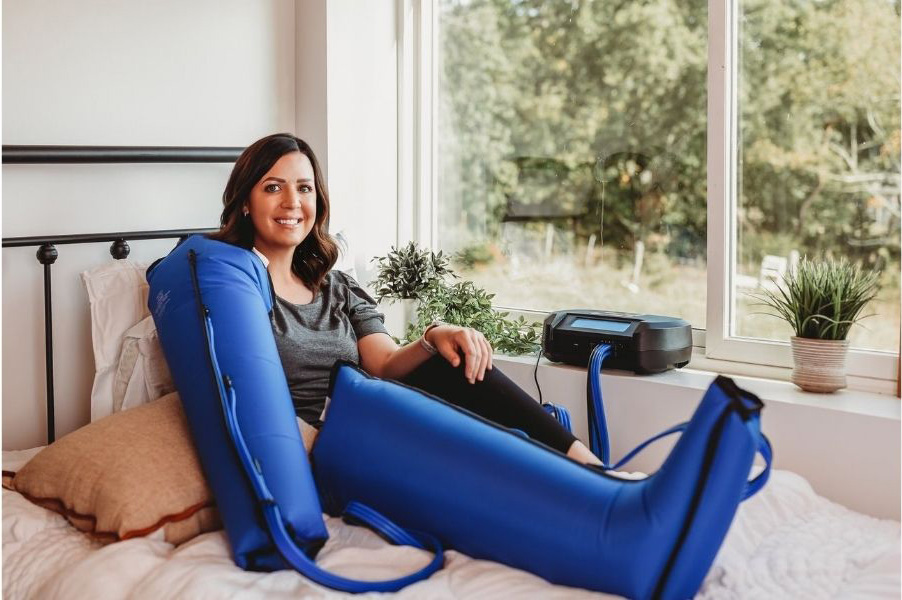
When recommended, support the affected limb while resting without creating pressure points behind the knee, under the heel, or elsewhere. A pillow or properly adjusted bed may be used according to clinician guidance. Elevation does not replace prescribed compression or exercise.